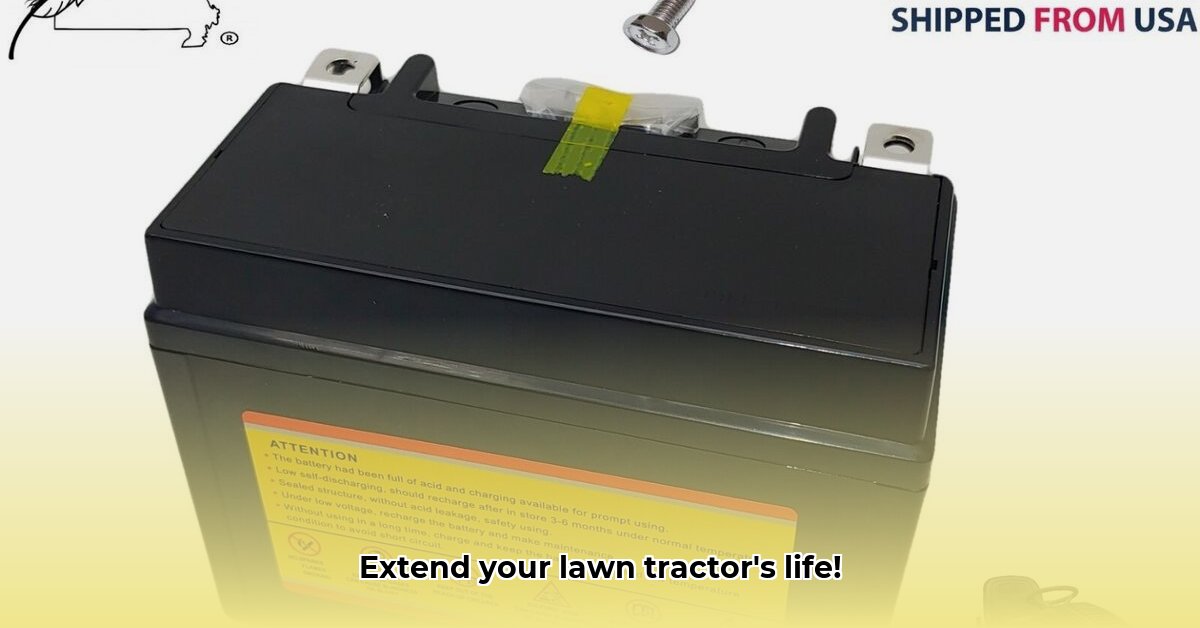
Understanding Your Lawn Tractor's 12v Battery
Your lawn tractor's 12v battery is its essential power source, responsible for starting the engine and powering accessories. Understanding its function and maintenance is crucial for keeping your tractor running smoothly. But what type of battery do you have? How long does it last? Let's explore the key aspects. For more information on lawn tractor attachments, check out this helpful resource.
Types of Lawn Tractor Batteries
Several battery types power lawn tractors, each with pros and cons:
- Lead-Acid: These are inexpensive and widely available but tend to be heavier, require more maintenance, and have a shorter lifespan (typically 3-5 years).
- AGM (Absorbent Glass Mat): AGM batteries are spill-proof, more durable, and boast a longer lifespan (5-7 years) than standard lead-acid batteries. They come at a higher price point.
- Lithium-ion: These are lightweight, powerful, and offer the longest lifespan (7+ years), but they're also the most expensive and are sensitive to extreme temperatures.
The best choice depends on your budget and how frequently you use your tractor. Do you need the extended longevity of a lithium-ion battery, or will the cost-effectiveness of a lead-acid battery suffice?
Testing Your Lawn Tractor Battery
Before replacing your battery, a simple test can determine its health. A voltage test using a multimeter (a readily available tool at most hardware stores) is a great starting point.
How to Perform a Voltage Test:
- Set your multimeter: Select the DC voltage setting (usually indicated by "V").
- Connect the leads: Attach the red lead to the positive (+) terminal and the black lead to the negative (-) terminal of your battery.
- Read the voltage: A healthy battery should register around 12.6 volts or higher. Readings below 12.2 volts indicate a weak battery.
A more comprehensive load test, simulating engine starting conditions, provides a more accurate assessment of battery health. Many auto parts stores offer free battery testing services. Is your current battery providing sufficient power for your needs?
Replacing Your Lawn Tractor Battery: A Step-by-Step Guide
Replacing a lawn tractor battery is a relatively simple task, but safety precautions are paramount.
Steps to Replace Your Battery:
- Safety First: Always disconnect the negative (-) terminal first, followed by the positive (+) terminal. This prevents accidental sparks.
- Locate and Remove: Consult your owner's manual for the battery's location and removal instructions. Some batteries are held in place with clamps or straps.
- Clean Terminals: Use a wire brush to remove corrosion from the terminals to ensure a clean, secure connection.
- Install the New Battery: Place the new battery securely in its designated spot and connect the terminals – positive (+) first, then negative (-).
Following these steps diligently ensures a safe and effective battery replacement.
Maintaining Your Lawn Tractor Battery for a Longer Life
Proactive battery maintenance significantly extends its lifespan.
Essential Maintenance Tips:
- Keep it Clean: Regularly clean battery terminals with a wire brush and baking soda solution to prevent corrosion buildup, which can impede current flow.
- Check Fluid Levels (Lead-Acid Only): For lead-acid batteries, periodically check the electrolyte fluid level and add distilled water as needed. Never overfill.
- Proper Charging: Allow the battery to fully recharge after each use. Consistent over-discharging greatly reduces battery life.
- Storage: If storing your tractor for an extended period, fully charge the battery before storage and keep it in a cool, dry place.
These simple steps can noticeably extend your battery's life and prevent premature failure.
Troubleshooting Starting Problems
Starting issues aren't always solely due to a faulty battery. Consider these other factors:
- Loose or Corroded Terminals: Corrosion can disrupt the electrical connection, even if the battery itself is fine.
- Faulty Charging System: A failing charging system will not maintain a full battery charge.
- Parasitic Drain: A small, continuous electrical draw when the tractor is off can gradually deplete the battery.
Addressing these potential issues before replacing the battery can save time and expense. A thorough investigation is key to identifying the root cause of starting problems.
Responsible Recycling of Lawn Tractor Batteries
Proper disposal of lawn tractor batteries is crucial due to the hazardous materials they contain, particularly lead and lithium compounds.
Recycling Steps for Lithium-Ion Batteries:
- Identify Battery Type: Check for markings on the battery to determine if it is lead-acid or lithium-ion.
- Locate Recycling Options: Check with local retailers, recycling centers, or hazardous waste facilities. Consult your municipal waste management website for details. [1]
- Prepare for Transport: Secure the battery to prevent damage during transportation. For lithium-ion batteries, cover the terminals to avoid short circuits.
- Drop Off or Ship: Follow the recycling center's instructions for drop-off or shipping.
- Verify Disposal: Obtain confirmation of proper disposal for peace of mind.
Responsible battery recycling protects the environment and prevents harmful materials from entering our ecosystem.
[1]: (Example: A link to a reputable battery recycling resource, perhaps a government agency or a national organization)